
Search
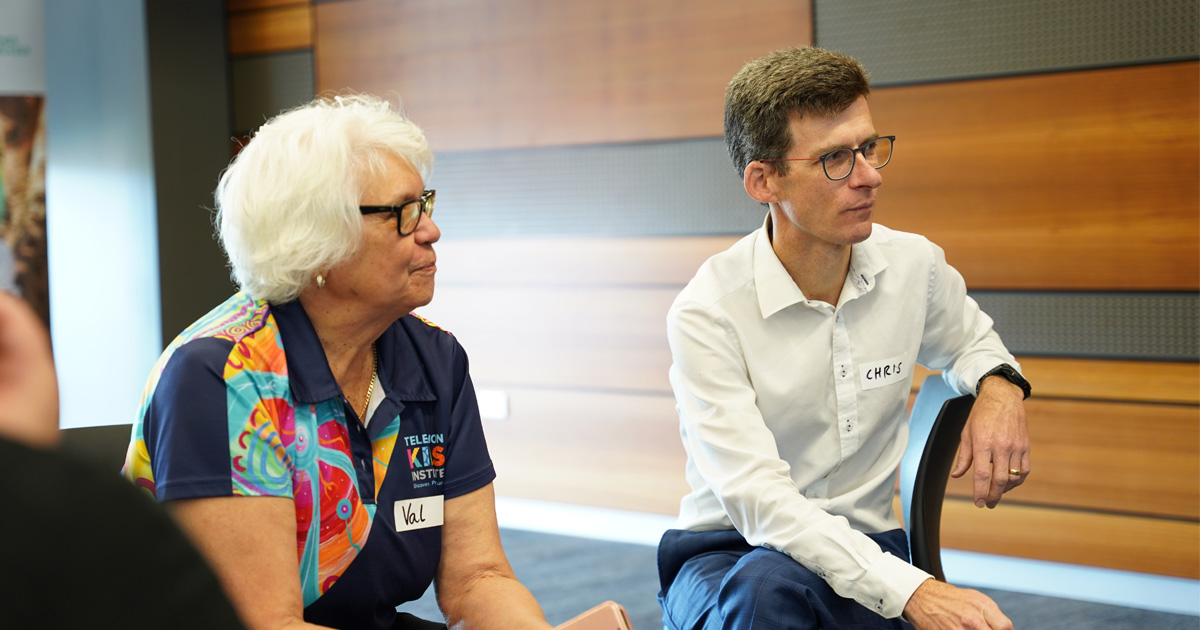
Researchers from the Wesfarmers Centre of Vaccines and Infectious Diseases at The Kids Research Institute Australia have shared their expertise with the community in Cockburn, covering topics ranging from respiratory disease in babies to recurring ear infections in kids.
Children with early-life recurrent otitis media (OM) will often endure pain, sleep disturbances, and other developmental setbacks that impact the surrounding family system. The aim of this study was to investigate the psychological well-being and family functioning of caregivers of children with early-life recurrent OM (rOM).

Researchers have made a world-first discovery on how to prevent severe respiratory infections in babies.
The present study aims to investigate the association between an early history of recurrent otitis media (OM) with or without ventilation tube insertion and later behavioural problems in childhood and adolescence.
Anya Deborah Pat Jones Strickland Holt BSc MSc PhD PhD PhD, DSc, FRCPath, FRCPI, FAA Honorary Research Associate Head, Pregnancy and Early Life
Shortage of ear, nose, and throat specialists in public hospitals can result in delays in the detection and management of otitis media. This study introduced a new hospital-based telehealth service, named the Ear Portal, and investigated its role in improving access to specialist care.

Honorary Research Associate
Glue ear is when a child's middle ear fills with sticky fluid behind the ear drum. A common condition, glue ear usually goes undetected, as it's not an obvious condition from the outside.
AEC-conditioned DC showed selective upregulation of chemokines that recruit Th1 cells, but minimal change in chemokines linked to Th2 cell recruitment.
Otitis media (OM) is the leading cause of childhood hearing loss but its burden in low-middle-income countries like Papua New Guinea (PNG) is poorly understood. We aimed to determine the proportion of children aged ≤15 years attending clinics in Goroka, Eastern Highlands Province, PNG with OM and associated risk factors.
The objective of this study was to elucidate the molecular networks that underpin virus-induced exacerbations in asthmatic children in vivo.
This is the first update of a Cochrane review published in 2020. Chronic suppurative otitis media (CSOM), sometimes referred to as chronic otitis media, is a chronic inflammation and often polymicrobial infection of the middle ear and mastoid cavity, characterised by ear discharge (otorrhoea) through a perforated tympanic membrane. The predominant symptoms of CSOM are ear discharge and hearing loss. Aural toileting describes processes for manually cleaning the ear, including dry mopping (with cotton wool or tissue paper), suction clearance (typically under a microscope), or irrigation (using manual or automated syringing). Aural toileting can be used alone or in addition to other treatments for CSOM, such as antibiotics or topical antiseptics. This is one of a suite of seven Cochrane reviews evaluating the effects of non-surgical interventions for CSOM.
The objective of this study was to elucidate the molecular networks that underpin virus-induced exacerbations in asthmatic children in vivo.
Otitis media (OM), middle ear infection, represents a significant burden on children, their families, and the healthcare system. OM is the major cause of hearing loss in children and if left untreated in children who suffer chronic and recurrent forms of OM, this disease can have serious life-long sequelae.
Results from recent clinical studies suggest potential efficacy of immune training (IT)-based approaches for protection against severe lower respiratory tract infections in infants, but underlying mechanisms are unclear.
Tamara Chris Valerie Veselinovic Brennan-Jones Swift BSc(Hons) MClinAud PhD PhD Clinical Research Fellow Head, Ear and Hearing Health Aboriginal
The immunological changes underpinning acquisition of remission (also called sustained unresponsiveness) following food immunotherapy remain poorly defined. Limited access to effective therapies and biosamples from treatment responders has prevented progress. Probiotic peanut oral immunotherapy is highly effective at inducing remission, providing an opportunity to investigate immune changes.
Tonsillectomy and adenoidectomy are two of the most commonly performed ENT procedures in children, with over 500,000 cases performed annually in the United States. Whilst generally considered a safe and well-tolerated operation, it is not without its risks and complications including pain, nausea, anorexia and most importantly bleeding and post-tonsillectomy haemorrhage.
Human rhinovirus (RV)-induced exacerbations of asthma and wheeze are a major cause of emergency room presentations and hospital admissions among children. Previous studies have shown that immune response patterns during these exacerbations are heterogeneous and are characterized by the presence or absence of robust interferon responses.
Immunotherapy has revolutionised the treatment of cancers by exploiting the immune system to eliminate tumour cells. Despite the impressive response in a proportion of patients, clinical benefit has been limited thus far.