
Search
Understanding the geospatial distribution of influenza infection and the risk factors associated with infection clustering can inform targeted preventive interventions. We conducted a geospatial analysis to investigate the spatial patterns and identify drivers of medically attended influenza infection across all age groups in Western Australia.
Maternal influenza and pertussis vaccination is an important strategy to reduce morbidity and mortality in infants. Previous vaccine safety studies have mostly focused on the association between maternal vaccination and fetal death.
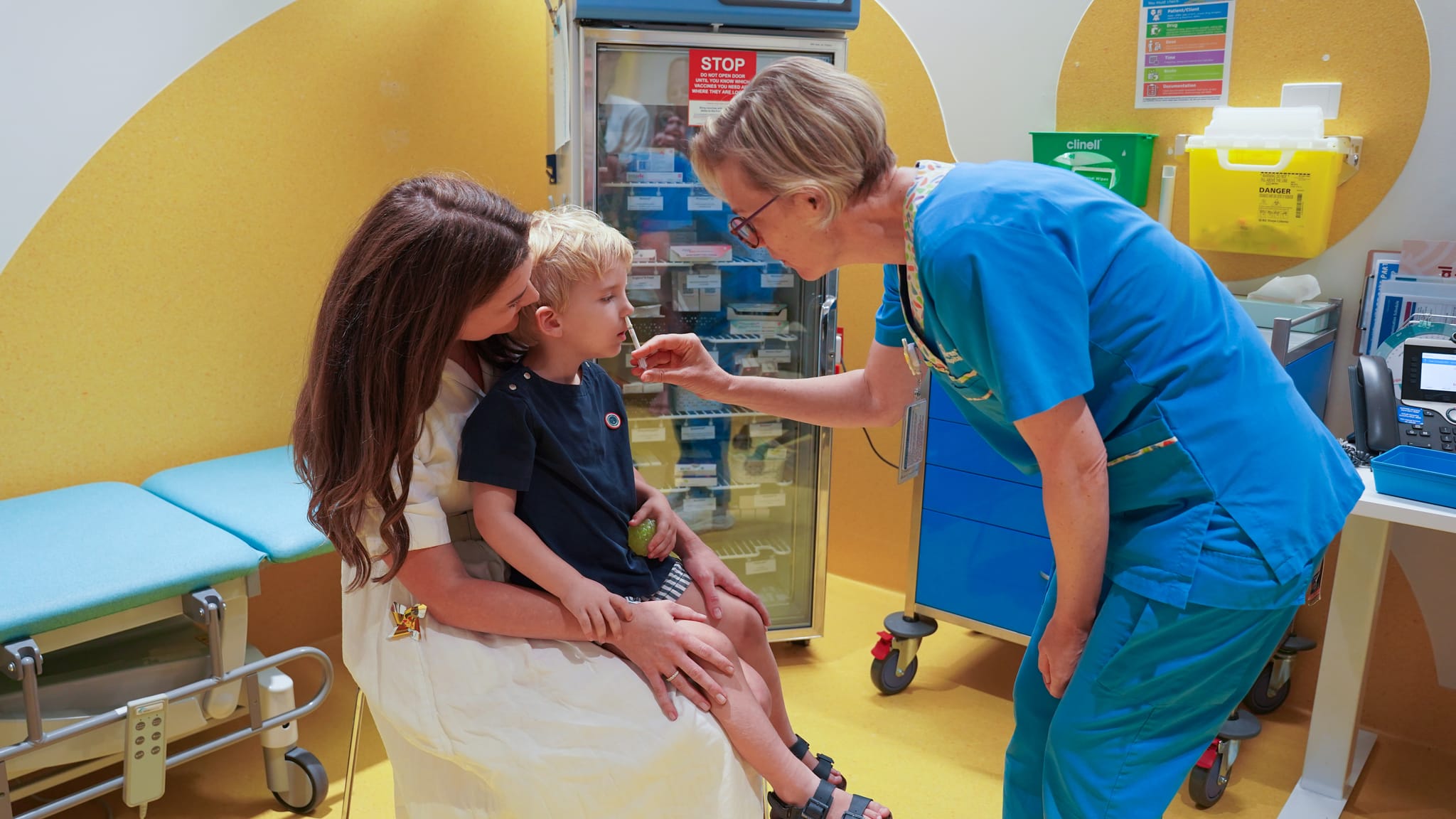
Researchers at The Kids Research Institute Australia hope an Australian-first nasal spray vaccine for two to 11-year-olds will boost flu vaccination this winter.
Respiratory syncytial virus (RSV) is a significant cause of respiratory infections in young children. Since 2021, RSV has been a notifiable disease in Australia. However, current surveillance systems focus on hospitalised RSV, with limited surveillance at a community level through primary care clinics. This approach only captures RSV requiring hospitalisation. Less severe illnesses, while not captured, may have significant social and economic impacts including the associated cost of care and absenteeism. The aim of this study is to establish an understanding of the broader burden of RSV in young children in a community setting.
PICOBOO is a randomised, adaptive trial evaluating the immunogenicity and reactogenicity of licensed COVID-19 booster vaccines in immunocompetent individuals >12 years old. Here, we present data for seven different vaccines among three pre-specified participant strata defined by age and primary vaccine schedule.
Australia introduced a hybrid Respiratory Syncytial Virus (RSV) Maternal and Infant Protection Program (RSV-MIPP) in 2025, using National Immunisation Program-funded RSV vaccine for pregnant people from 28 weeks' gestation and jurisdiction-funded nirsevimab. We estimated real-world effectiveness and assessed the impact of the RSV-MIPP program across a participating surveillance network.
Understanding patterns of bacterial carriage and otitis media (OM) microbiology is crucial for assessing vaccine impact and informing policy. The microbiology of OM can vary with geography, time, and interventions like pneumococcal conjugate vaccines (PCVs). We evaluated the microbiology of nasopharyngeal and middle ear effusions in children living in Western Australia, 11 years following the introduction of PCV13.
Vaccination is the injection of an inactivated bacteria or virus into the body. This simulated infection allows an individual's immune system to develop an adaptive immunity for protection against that type of illness. When a sufficiently large percentage of a population has been vaccinated, this results in herd immunity.
Perth children are being asked to volunteer for an important national study to test the effectiveness of an influenza vaccine in children.
In Australia the 7-valent pneumococcal conjugate vaccine (PCV7) is administered at 2, 4 and 6 months of age, with no booster dose.