
Search
Infectious diseases such as tuberculosis (TB), malaria and soil-transmitted helminthiasis continue to impose a significant global health burden and socio-economic impact. Globally, minority indigenous people are disproportionately affected by poverty and are shown to experience a disparate burden of disease and poorer health outcomes than the comparative majority population.
As malaria incidence decreases and more countries move towards elimination, maps of malaria risk in low-prevalence areas are increasingly needed. For low-burden areas, disaggregation regression models have been developed to estimate risk at high spatial resolution from routine surveillance reports aggregated by administrative unit polygons.
Insecticide-treated nets (ITNs) are one of the most widespread and impactful malaria interventions in Africa, yet a spatially-resolved time series of ITN coverage has never been published. Using data from multiple sources, we generate high-resolution maps of ITN access, use, and nets-per-capita annually from 2000 to 2020 across the 40 highest-burden African countries.
An estimated 14 million cases of Plasmodium vivax malaria were reported from Asia, Central and South America, and the Horn of Africa. The clinical burden of vivax malaria is largely driven by its ability to form dormant liver stages (hypnozoites) that can reactivate to cause recurrent episodes of malaria. Elimination of both the blood and liver stages of the parasites ("radical cure") is required to achieve a sustained clinical response and prevent ongoing transmission of the parasite.
The human landing catch (HLC) measures human exposure to mosquito bites and evaluates the efficacy of vector control tools. However, it may expose volunteers to potentially infected mosquitoes. The mosquito electrocuting trap (MET) and BG-Sentinel traps (BGS) represent alternative, exposure-free methods for sampling host-seeking mosquitoes. This study investigates whether these methods can be effectively used as alternatives to HLC for measuring the efficacy of transfluthrin emanator against Aedes aegypti.
Health Management Information System (HMIS) is a set of data regularly collected at health care facilities to meet the needs of statistics on health services. This study aimed to determine the utilisation of HMIS data and factors influencing the health system's performance at the district and primary health care facility levels in Tanzania.
Children with medical comorbidities are at greater risk for severe influenza and poorer clinical outcomes. Despite recommendations and funding, influenza vaccine coverage remains inadequate in these children. We aimed to systematically review literature assessing interventions targeting influenza vaccine coverage in children with comorbidities and assess the impact on influenza vaccine coverage.
The aim of this study was to provide a comprehensive evidence on risk factors for transmission, disease severity and COVID-19 related deaths in Africa. A systematic review has been conducted to synthesise existing evidence on risk factors affecting COVID-19 outcomes across Africa.
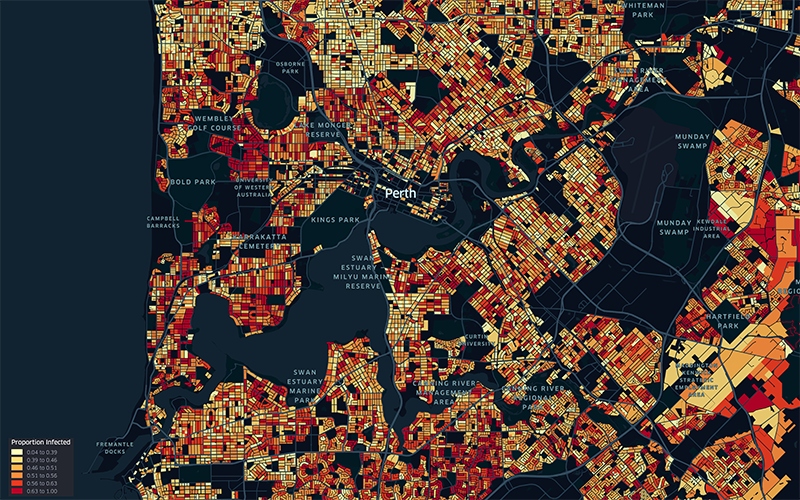
WA’s current Omicron COVID-19 outbreak could jump by 147,000 cases if mask mandates are abandoned before the Easter long weekend, according to sophisticated new modelling.
A regional corner of Africa is a hotspot for cases of HIV, tuberculosis and malaria, prompting researchers to call for targeted health support rather than a national response.