Skip to content

Search

Cyanide in bronchoalveolar lavage is not diagnostic for Pseudomonas aeruginosa in children with cystic fibrosis

We investigated whether cyanide in bronchoalveolar lavage (BAL) fluid could be used as an early diagnostic biomarker of infection in kids with cystic fibrosis

Innate inflammatory responses of pediatric cystic fibrosis airway epithelial cells: Effects of nonviral and viral stimulation

There is controversy regarding whether cystic fibrosis (CF) airway epithelial cells (AECs) are intrinsically proinflammatory.

Expression of bronchodilator response using forced oscillation technique measurements: absolute versus relative

Expression of bronchodilator response using forced oscillation technique measurements: absolute versus relative

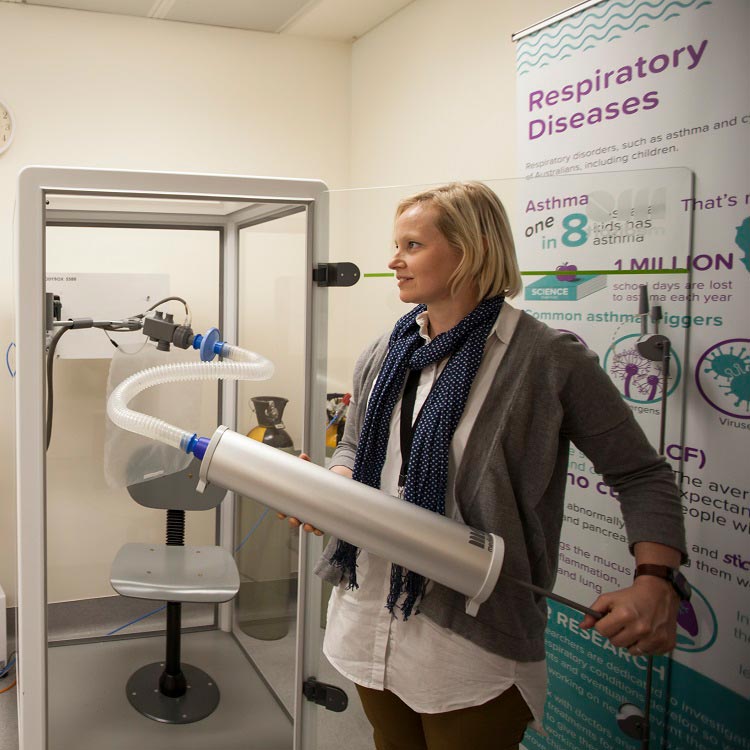
Lung function testing in preschool-aged children with cystic fibrosis in the clinical setting

This study investigated the nature and prevalence of atypical pain responses in Rett syndrome and their relationships with specific MECP2 mutations.

Transcriptomic analysis of primary nasal epithelial cells reveals altered interferon signalling in preterm birth survivors at one year of age

Many survivors of preterm birth (<37 weeks gestation) have lifelong respiratory deficits, the drivers of which remain unknown. Influencers of pathophysiological outcomes are often detectable at the gene level and pinpointing these differences can help guide targeted research and interventions. This study provides the first transcriptomic analysis of primary nasal airway epithelial cells in survivors of preterm birth at approximately 1 year of age.

Treatment with inhaled aerosolised ethanol reduces viral load and potentiates macrophage responses in an established influenza mouse model

Treatment options for viral lung infections are currently limited. We aimed to explore the safety and efficacy of inhaled ethanol in an influenza-infection mouse model.

Bile acids in the lower airways is associated with airway microbiota changes in chronic obstructive pulmonary disease: an observational study

Chronic obstructive pulmonary disease (COPD) is a complex disorder with a high degree of interindividual variability. Gastrointestinal dysfunction is common in patients with COPD and has been proposed to influence the clinical progression of the disease. Using the presence of bile acid(s) (BA) in bronchoalveolar lavage (BAL) fluid as a marker of gastric aspiration, we evaluated the relationships between BAs, clinical outcomes and bacterial lung colonisation.

Lentiviral vector gene therapy and CFTR modulators show comparable effectiveness in cystic fibrosis rat airway models

Mutation-agnostic treatments such as airway gene therapy have the potential to treat any individual with cystic fibrosis (CF), irrespective of their CF transmembrane conductance regulator (CFTR) gene variants. The aim of this study was to employ two CF rat models, Phe508del and CFTR knockout to assess the comparative effectiveness of CFTR modulators and lentiviral vector-mediated gene therapy. 

A near-complete genome of the uncultured Staphylococcus aureus phage COMBAT-CF_PAR1 isolated from the lungs of an infant with cystic fibrosis

In cystic fibrosis, bacteria–bacteriophage interaction in the lower airways is poorly understood. We present the near-complete genome of the uncultured Siphovirus-like bacteriophage, Staphylococcus aureus phage COMBAT-CF_PAR1, isolated from the lower airways. The genome spans 41,510 bp with 33.45% guanine–cytosine content and contains 65 open reading frames.

Phage therapy to treat cystic fibrosis Burkholderia cepacia complex lung infections: perspectives and challengesge

Burkholderia cepacia complex is a cause of serious lung infections in people with cystic fibrosis, exhibiting extremely high levels of antimicrobial resistance. These infections are difficult to treat and are associated with high morbidity and mortality.