
Search
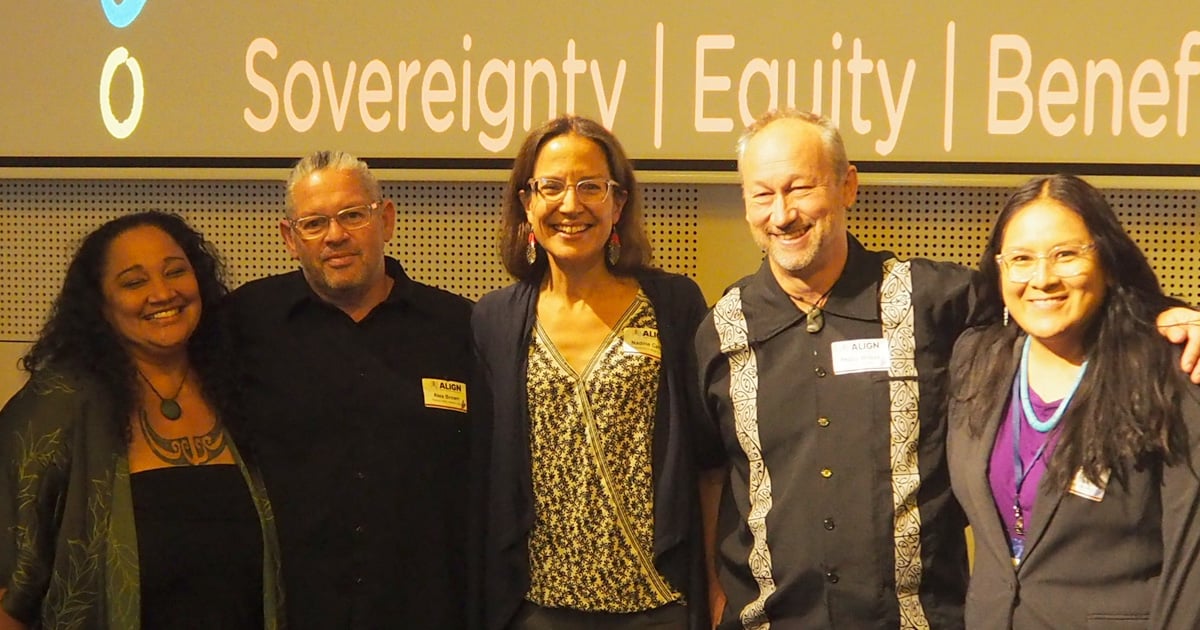
A national alliance of the brightest minds in genomic science, academia, policy makers, industry and Indigenous leaders will work to break down barriers to ensure Aboriginal and Torres Strait Islander people can benefit from advances in genomic medicine if they choose.
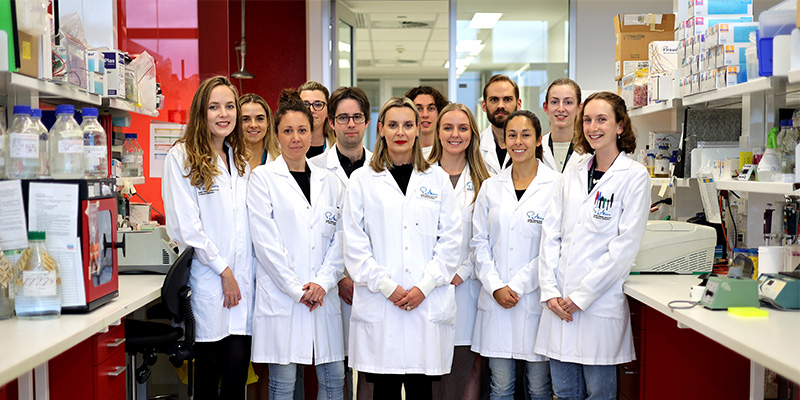
Aleksandra Filipovska has been elected a Fellow of the Australian Academy of Health and Medical Sciences.

A new national network will be established to advance the benefits from Genomic Medicine for Aboriginal and Torres Strait Islander people living in Australia.
Genomic sequencing in congenital heart disease (CHD) patients often discovers novel genetic variants, which are classified as variants of uncertain significance (VUS). Functional analysis of each VUS is required in specialised laboratories, to determine whether the VUS is disease causative or not, leading to lengthy diagnostic delays.
The Australian Genomics Cardiovascular Disorders Flagship was a national multidisciplinary collaboration. It aimed to investigate the feasibility of genome sequencing and functional genomics to resolve variants of uncertain significance in the clinical management of patients and families with cardiomyopathies, primary arrhythmias, and congenital heart disease.
Current differentiation protocols have not been successful in reproducibly generating fully functional human beta cells in vitro, partly due to incomplete understanding of human pancreas development. Here, we present detailed transcriptomic analysis of the various cell types of the developing human pancreas, including their spatial gene patterns. We integrated single-cell RNA sequencing with spatial transcriptomics at multiple developmental time points and revealed distinct temporal-spatial gene cascades.
RNA-sequencing (RNA-seq) efforts in acute lymphoblastic leukaemia have identified numerous prognostically significant genomic alterations which can guide diagnostic risk stratification and treatment choices when detected early.
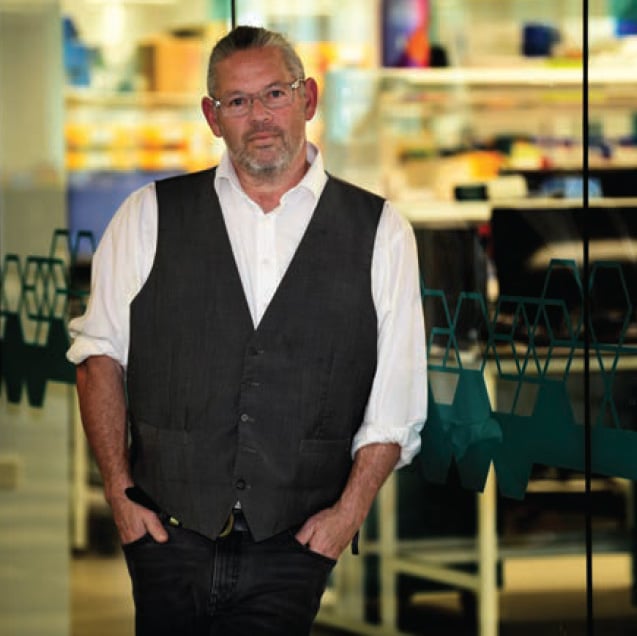
Scientific discoveries over the past 30 years mean doctors now have a deeper understanding of what causes disease and how those diseases might progress.
Indigenous communities are under-represented in genomics research, contributing to inequitable health-related knowledge, outcomes, and benefits. Under-representation reflects enduring consequences of colonial research practices that have engendered cultural, ethical, legal, and social (CELS) concerns among communities.
Despite significant improvements in pediatric cancer survival outcomes, there remain glaring disparities in under-represented racial and ethnic groups that warrant mitigation by the scientific and clinical community. To address and work towards eliminating such disparities, the Pacific Pediatric Neuro-Oncology Consortium (PNOC) and Children's Brain Tumor Network (CBTN) established a Diversity, Equity, and Inclusion (DEI) working group in 2020. The DEI working group is dedicated to improving access to care for all pediatric patients with central nervous system (CNS) tumors, broadening diversity within the research community, and providing sustainable data-driven solutions.