
Search
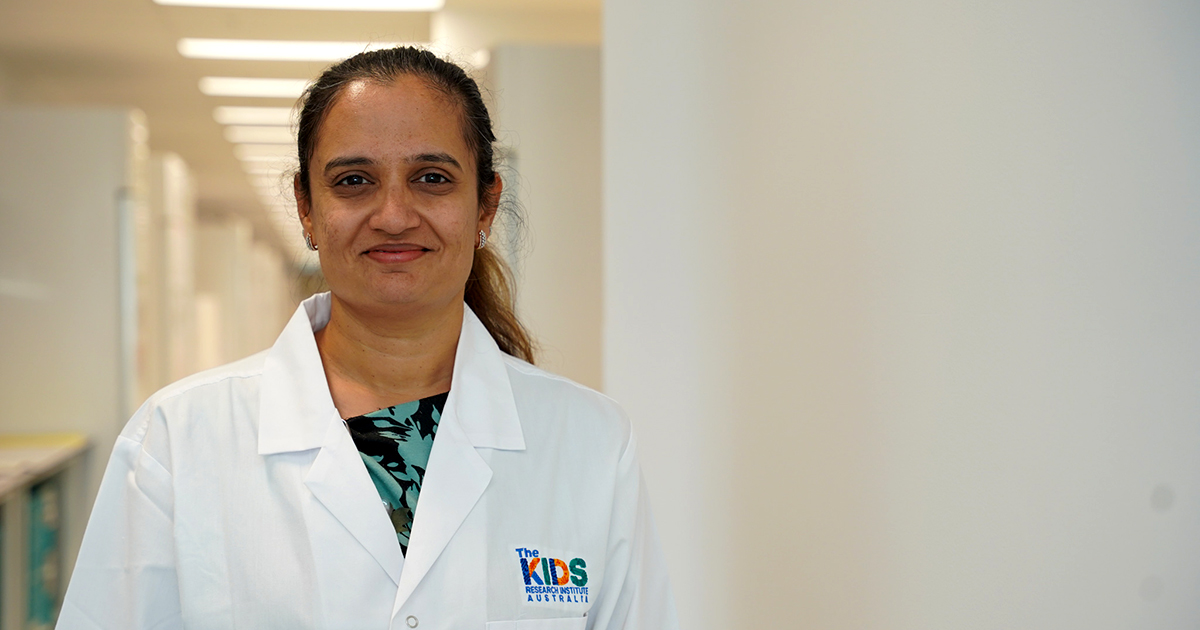
A landmark study led by Dr Hetal Dholaria, The Kids Research Institute Australia researcher and Perth Children’s Hospital Oncologist, has confirmed that a “wait and watch” approach for newborns diagnosed with neuroblastoma is not only safe, but effective over the long term.
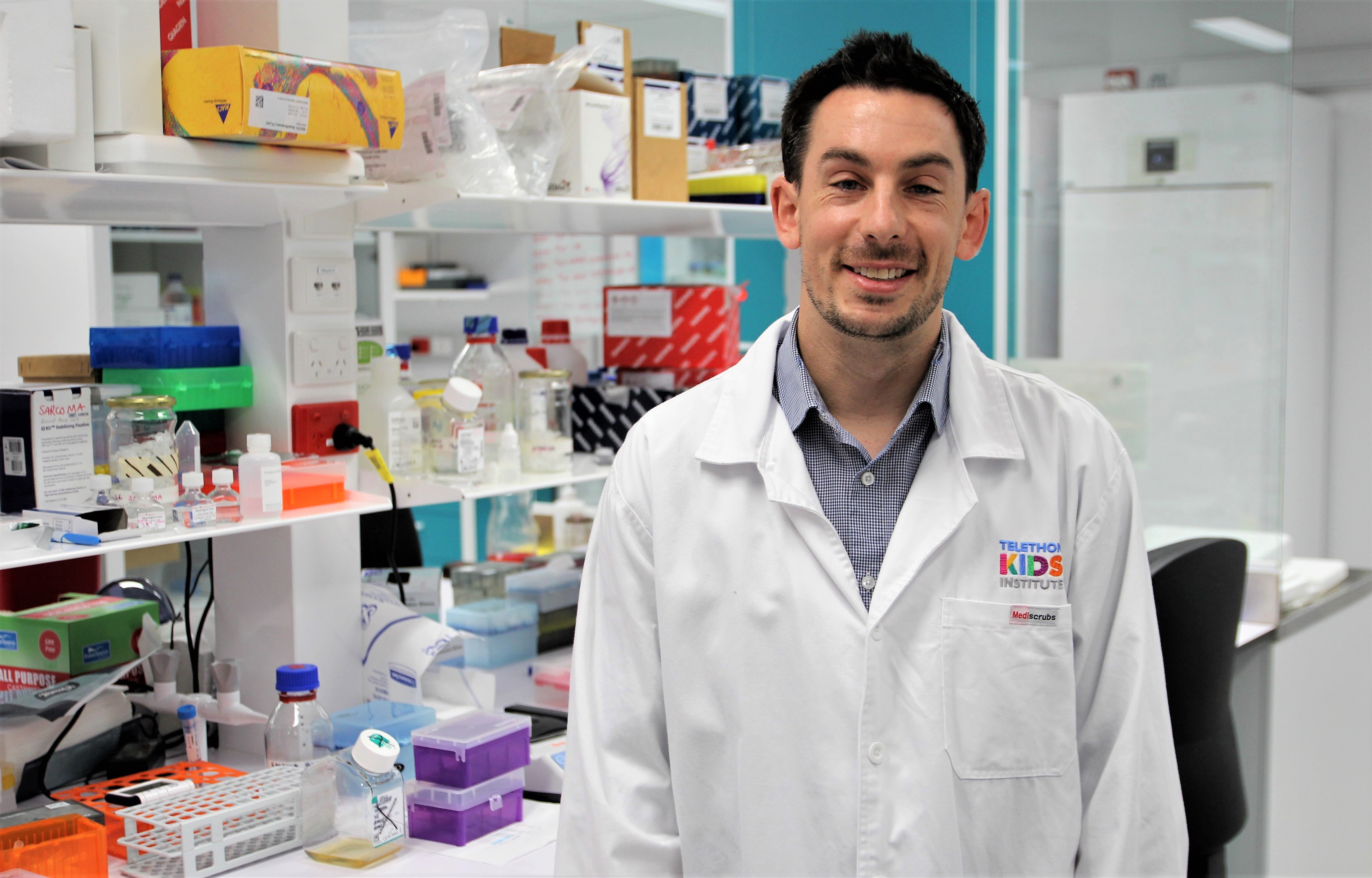
Cure Cancer and The Kids Research Institute Australia researcher Dr Ben Wylie announced new potential treatment in time for Childhood Sarcoma Awareness month.
DNA methylation-based classification is now central to contemporary neuro-oncology, as highlighted by the World Health Organization classification of central nervous system tumors. This expansion is a result of newly identified tumor types discovered through our large online repository and global collaborations, underscoring CNS tumor heterogeneity.
Ewing Sarcoma of the pelvis has poorer outcomes than other anatomical sites, with complex anatomy often precluding resection with wide margins. The role of postoperative radiotherapy (RT) in improving outcomes remains undefined. A systematic review using Medline, Embase and Cochrane databases (1972-April 2024) evaluated postoperative RT's impact on local recurrence, event-free survival and overall survival. Twenty-nine retrospective studies (21 to 296 patients) met inclusion criteria, with 28 rated good quality.
Preemptive pharmacogenomic (PGx) testing in pediatric oncology patients could reduce toxicity and improve efficacy of medications yet remains underutilized. Consumer identified implementation barriers have not been extensively explored nor included adolescent or young adult (AYA) patient perspectives. This study describes Australian pediatric oncology consumer perspectives on PGx testing, elucidating barriers to implementation.
Cancer is a leading cause of death globally. Accurate cancer burden information is crucial for policy planning, but many countries do not have up-to-date cancer surveillance data. To inform global cancer-control efforts, we used the Global Burden of Diseases, Injuries, and Risk Factors Study (GBD) 2023 framework to generate and analyse estimates of cancer burden for 47 cancer types or groupings by age, sex, and 204 countries and territories from 1990 to 2023, cancer burden attributable to selected risk factors from 1990 to 2023, and forecasted cancer burden up to 2050.
The investigation of ovarian development, dysfunction, and aging is essential for female reproductive health. Despite extensive research on the cellular functions of Brefeldin A (BFA) as an intracellular transport inhibitor, its specific effects and mechanisms on ovarian development/aging remain inadequately understood.
Citation: Sek K, Chen AXY, Cole T, Armitage JD, Tong J, ……… Waithman J, Parish IA, et al. Tumor site-directed A1R expression enhances CAR T cell
Aboriginal and Torres Strait Islander (hereafter respectfully named Indigenous) Australians are diagnosed with some cancers substantially more frequently than non-Indigenous Australians implying a different risk factor landscape. Additionally, poorer outcomes for certain cancers are exacerbated by lower cancer screening rates and later diagnoses compared to non-Indigenous Australians.
Ion channel activity underlying biological processes that drive high-grade gliomas (HGG) is largely unknown. We aimed to determine the networking of ion channel genes and validate their expression within HGG patient tumors, to identify ion channel-targeting drugs that would inhibit tumor-promoting processes.