
Search
The last decade has seen rapid advances in the genetic technology that is allowing researchers to examine host-pathogen interactions at a whole organism level.
Congenital Toxoplasma gondii infection can result in intracranial calcification, hydrocephalus and retinochoroiditis. Acquired infection is commonly associated
To look at the interplay between PMN and macrophages in disease progression in humans we asked whether polymorphisms at genes that regulate their infiltration..
Our goal was to identify genetic risk factors for severe otitis media (OM) in Aboriginal Australians.

Once upon a time it was infectious diseases like polio, measles or tuberculosis that most worried parents. With these threats now largely under control, parents face a new challenge – sky-rocketing rates of non-infectious diseases such as asthma, allergies and autism.
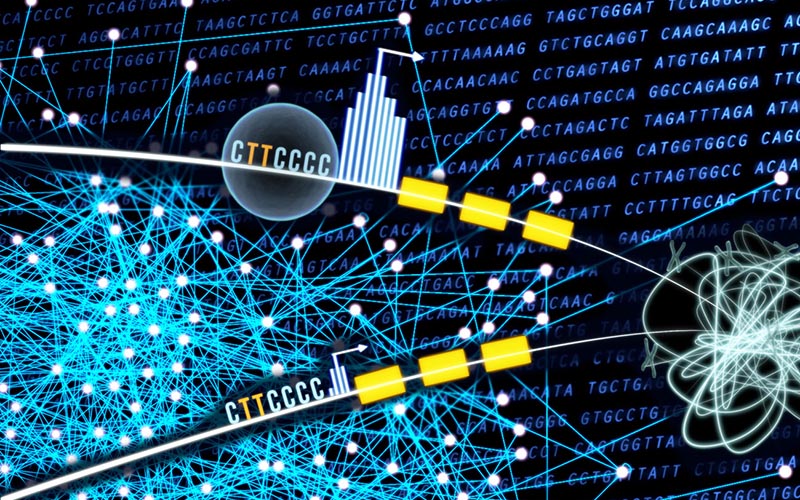
A researcher's work from 20 years ago has helped to crack one of biology’s biggest mysteries.
The interleukin (IL)-6 family of cytokines and exaggerated signal transducer and activator of transcription (STAT)3 signaling is implicated in idiopathic pulmonary fibrosis (IPF) pathogenesis, but the mechanisms regulating STAT3 expression and function are unknown. Suppressor of cytokine signaling (SOCS)1 and SOCS3 block STAT3, and low SOCS1 levels have been reported in IPF fibroblasts and shown to facilitate collagen production. Fibroblasts and lung tissue from IPF patients and controls were used to examine the mechanisms underlying SOCS1 down-regulation in IPF.
Visceral leishmaniasis (VL; Leishmania donovani) cases produce interferon-γ and tumor necrosis factor in response to soluble leishmanial antigen in whole-blood assays. Using transcriptional profiling, we demonstrate the impact of interleukin-10, a cytokine implicated in VL, on this response.
The recent increase in babies born with brain and eye malformations in Brazil is associated with Zika virus (ZIKV) infection in utero. ZIKV alters host DNA methylation in vitro. Using genome-wide DNA methylation profiling we compared 18 babies born with congenital ZIKV microcephaly with 20 controls. We found ZIKV-associated alteration of host methylation patterns, notably at RABGAP1L which is important in brain development, at viral host immunity genes MX1 and ISG15, and in an epigenetic module containing the causal microcephaly gene MCPH1. Our data support the hypothesis that clinical signs of congenital ZIKV are associated with changes in DNA methylation.
Exome sequencing has enabled molecular diagnoses for rare disease patients but often with initial diagnostic rates of ~25-30%. Here we develop a robust computational pipeline to rank variants for reassessment of unsolved rare disease patients. A comprehensive web-based patient report is generated in which all deleterious variants can be filtered by gene, variant characteristics, OMIM disease and Phenolyzer scores, and all are annotated with an ACMG classification and links to ClinVar.