
Search
Pre-clinical models that effectively recapitulate human disease are critical for expanding our knowledge of cancer biology and drug resistance mechanisms.
Aberrant expression of the TLX1/HOX11 proto-oncogene is associated with a significant subset of T-cell acute lymphoblastic leukemias...
CD8α+ DCs are not the sole subset cross-presenting cell associated tumor antigens from a solid tumor
We examined the baseline profile of a panel of T-ALL cell lines to determine factors that contribute to GC resistance without prior drug selection.
Sébastien Malinge PhD Laboratory Head, Translational Genomics in Leukaemia, Senior Research Fellow (University of Western Australia), Adjunct Senior
Rishi S. Kotecha MB ChB (Hons) MRCPCH FRACP PhD Co-Head, Leukaemia Translational Research rishi.kotecha@health.wa.gov.au Co-Head, Leukaemia

Four The Kids Research Institute Australia researchers are among those who have received funding in the WA State Government's Merit Award Program announced today.
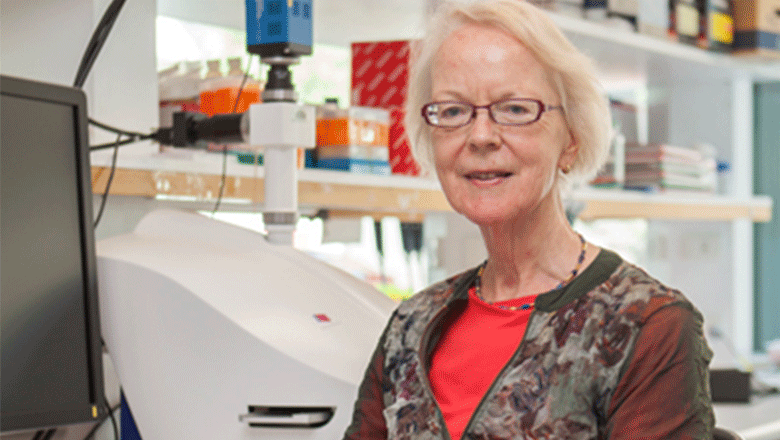
Researchers at The Kids Research Institute Australia have discovered a new drug combination that could help improve survival rates for babies with leukaemia.

Congratulations to three The Kids Research Institute Australia researchers, who have been awarded funding from the Raine Medical Research Foundation.
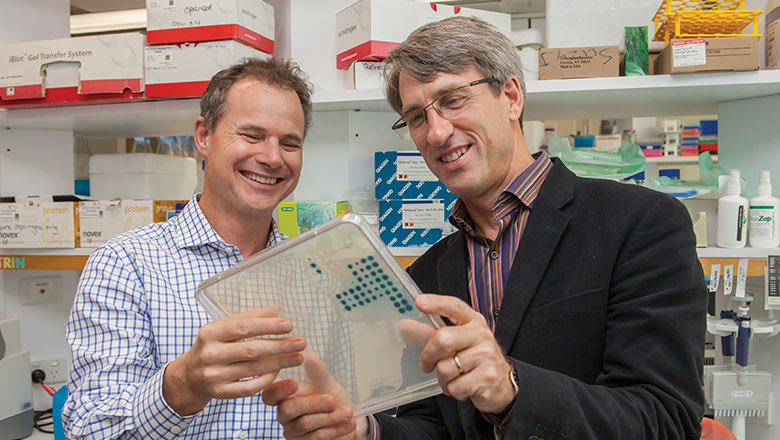
The Drug Discovery Unit has been finding ways for smart drugs to penetrate deep into cells and attacking their disease targets while causing fewer side effects