
Search
CANVAS is a commitment by the Governments of Australia and New Zealand to advance the development of a vaccine against GAS infection, which can cause rheumatic fever.
NHMRC funding has been awarded for 4 years to Murdoch Childrens Research Institute for this project, with collaboration from Professor Jonathan Carapetis at The Kids.
END RHD is an alliance of health, research and community organisations seeking to amplify efforts to end rheumatic heart disease in Australia through advocacy and engagement.
Kimberley Aboriginal Medical Services, Nirrumbuk Environmental Health and Services and The Kids Research Institute Australia seek to implement and evaluate a community-led project, funded by the Department of Health, to prevent and manage RHD in a selected high-risk Aboriginal community
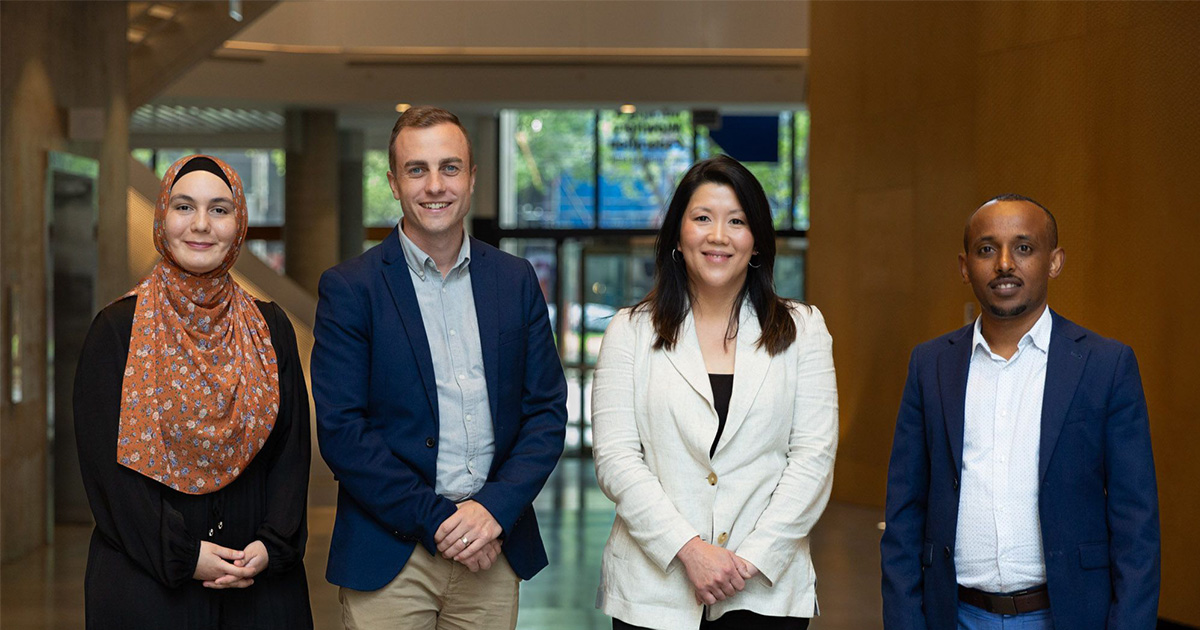
A leading tuberculosis researcher from The Kids Research Institute Australia and Curtin University has been named a finalist for the Association of Australian Medical Research Institutes (AAMRI) 2024 Rising Star Award.
The END RHD Communities approach uses community-led, research-backed prevention strategies to tackle Strep A skin and throat infections, acute rheumatic fever and rheumatic heart disease
Worldwide, tuberculosis (TB) remains the leading cause of death from infectious diseases. Africa is the second most-affected region, accounting for a quarter of the global TB burden, but there is limited evidence whether there is subnational variation of TB prevalence across the continent. Therefore, this study aimed to estimate sub-national and local TB prevalence across Africa.
Continued progress in controlling RHD requires an understanding of how to improve delivery of regular injections of penicillin - secondary prophylaxis (SP).
This is a 6 month cohort study involving participants at Princess Margaret Hospital prescribed BPG for secondary prophylaxis of RHD.
Low tuberculosis (TB) case detection remains a major challenge in achieving the End TB targets. New strategies that consider local contexts are needed in countries with high TB burdens like Ethiopia. This study examined the effect of integrating traditional and modern TB care to increase the TB case detection rate.
RHD Action is the name given to the global movement to reduce the burden of rheumatic heart disease (RHD) in vulnerable populations of all ages throughout the world.
Country-level estimates can mask local geographic variations in progress toward achieving World Health Organization's End TB targets. This study aimed to identify spatial variations in progress toward achieving the TB incidence reduction target at a district level in Ethiopia.
The Kids Research Institute Australia (Jonathan Carapetis) is a member of the new Global Strep A Vaccine Consortium; a global GAS vaccine consortium that will drive strategic planning to anticipate requirements for licensure, prequalification, and policy recommendations.
Tuberculosis (TB) is the leading infectious cause of death globally, with approximately three million cases remaining undetected, thereby contributing to community transmission. Understanding the spatial distribution of undetected TB in high-burden settings is critical for designing and implementing geographically targeted interventions for early detection and control.
Tuberculosis (TB) is caused by Mycobacterium tuberculosis (Mtb) and is a leading cause of death. BCG is the only licensed TB vaccine. Preclinical studies have shown that in adults, intravenous administration of BCG improves protection against TB. We hypothesize that intradermal administration of BCG to the human newborn leads to low-grade BCG bacteremia and that this systemic dissemination improves protection against Mtb infection. This hypothesis is based on supporting observations including animal and human studies. It is a testable hypothesis and offers to deliver immediately actionable insight to advance the global efforts against TB.
Interferon γ release assays (IGRAs) are widely used for diagnosis of latent tuberculosis infection. However, with repeated testing, IGRA transformation (conversion or reversion) may be detected and is challenging to interpret. We reviewed the frequency of and risk factors for IGRA transformation.
The mission of SAVAC, the Strep A Vaccine Global Consortium, to ensure that safe, effective and affordable Strep A vaccines are available and implemented to decrease the burden of Strep A disease in the most in need.
Bacille Calmette-Guérin (BCG) is the most commonly administered vaccine in human history. The medical application of BCG extends far beyond the fight against tuberculosis. Despite its stellar medical record over 100 years, insight into how BCG provides this vast range of benefits is largely limited, both for its pathogen-specific (tuberculosis) as well as pathogen-agnostic (other infections, autoimmunity, allergies, and cancer) effects.