
Search
We have closely followed the international literature about severe acute respiratory syndrome coronavirus 2 (SARS‐CoV‐2) transmission dynamics in children (aged 0–18 years).2 Evidence‐informed discussion about school attendance in the context of COVID‐19 is a high priority and this complex subject requires weighted expert review of the literature to accurately inform policy. As paediatricians and infectious diseases specialists, we wish to highlight important considerations when interpreting the available data.
The epidemiology of invasive meningococcal disease has changed over the last decade and there has been an increase in cases caused by serogroup W135, particularly in Indigenous children. Extra‐meningeal and atypical presentations are associated with serogroup W and may delay diagnosis and therefore appropriate treatment. Public and clinician awareness are essential in facilitating effective new vaccine schedule implementation.
Recently, we identified a Staphylococcus aureus sequence type 5 (ST5) clone in northern Australia with discrepant trimethoprim-sulfamethoxazole (SXT) susceptibility results. We aimed to identify isolates of this clone using Vitek 2 SXT resistance as a proxy and to compare its epidemiology with those of other circulating S. aureus strains. We collated Vitek 2 susceptibility data for S. aureus isolates collected through our laboratory and conducted a prospective, case-control study comparing clinical, microbiological, epidemiological, and genomic data for subsets of isolates reported as SXT resistant (cases) and SXT susceptible (controls) by Vitek 2.
Impetigo, a bacterial infection caused by Streptococcus pyogenes and S. aureus of the superficial dermis affects up to 162 million children at any one time. Three out of every five school-children in Samoa have active or recently healed impetigo, far higher than the global median impetigo prevalence surpassing previous estimates for the Oceania region.
Itraconazole remains a first-line antifungal agent for certain fungal infections in children, including allergic bronchopulmonary aspergillosis (ABPA) and sporotrichosis, but poor attainment of therapeutic drug levels is frequently observed with available oral formulations. A formulation of 'SUper BioAvailability itraconazole' (SUBA-itraconazole; Lozanoc®) has been developed, with adult studies demonstrating rapid and reliable attainment of therapeutic levels, yet paediatric data are lacking.
During a pandemic when hospitals are stretched and patients need isolation, the role of hospital-in-the-home (HITH) providing acute medical care at home has never been more relevant. We aimed to define and address the challenges to acute home care services posed by the COVID-19 pandemic.
The high burden of infectious disease and associated antimicrobial use likely contribute to the emergence of antimicrobial resistance in remote Australian Aboriginal communities. We aimed to develop and apply context-specific tools to audit antimicrobial use in the remote primary healthcare setting.
We have demonstrated the potential use of Bayesian Networks in improving antibiotic selection for children with osteomyelitis
The burden and consequences of skin infections for remote living indigenous people are high
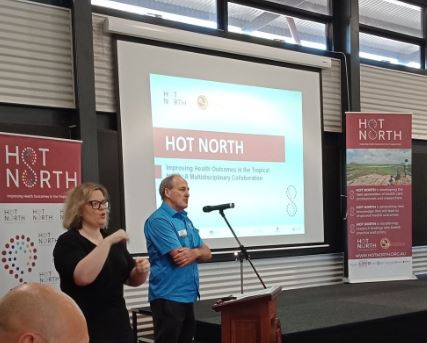
Over 100 researchers and health professionals from around Australia have united in Broome this week to address the major health battles facing people living in the tropical north of the country.