
Search
As Head of Aboriginal Research Development at Telethon Kids, Glenn Pearson believes his work brings us closer to identifying the real and whole Australian story
Children with otitis media (OM) experience long waiting times to access Australia's public hospitals due to limited capacity. The aim of this article is to utilize an Ear, Nose, and Throat (ENT) telehealth service (the Ear Portal) to examine whether delayed access to specialist care is associated with poorer behavioral outcomes for children with OM.
Chronic suppurative otitis media (CSOM) is a leading global cause of potentially preventable hearing loss in children and adults, associated with socioeconomic deprivation. There is an absence of consensus on the definition of CSOM, which complicates efforts for prevention, treatment, and monitoring.
To identify and review key research advances from the literature published between 2019 and 2023 on the diagnosis and microbiology of otitis media (OM) including acute otitis media (AOM), recurrent AOM (rAOM), otitis media with effusion (OME), chronic suppurative otitis media (CSOM) and AOM complications (mastoiditis).
Children with early-life recurrent otitis media (OM) will often endure pain, sleep disturbances, and other developmental setbacks that impact the surrounding family system. The aim of this study was to investigate the psychological well-being and family functioning of caregivers of children with early-life recurrent OM (rOM).
In remote communities of northern Australia, First Nations children with hearing loss are disproportionately at risk of poor school readiness and performance compared to their peers with no hearing loss. The aim of this trial is to prevent early childhood persisting otitis media (OM), associated hearing loss and developmental delay.
The present study aims to investigate the association between an early history of recurrent otitis media (OM) with or without ventilation tube insertion and later behavioural problems in childhood and adolescence.
Latest news & events at the Wesfarmers Centre of Vaccines & Infectious Diseases.
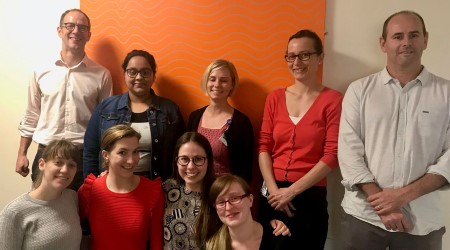
Clinical Professor Tobias Strunk, Dr Andrew Currie and their Neonatal Infection and Immunity Team have become the newest members of the Wesfarmers Centre of Vaccines and Infectious Diseases.
Australian Aboriginal and/or Torres Strait Islander children in rural/remote areas suffer high rates of persistent otitis media (OM) from early infancy. We aimed to determine the proportion of Aboriginal infants living in an urban area who have OM and investigate associated risk factors.