
Search
Natural outdoor environments provide important settings for children to engage in physical activity. It is unclear if these relationships also exist in preschool aged children. We examined associations between amount and type of neighbourhood vegetation and blue space, proximity to the beach and preschooler's device-measured movement behaviours.
We are working with the leadership and staff at foster care agencies and community members to provide information about cultural connection, and cultural activity and resources for Aboriginal children living in non-Aboriginal care arrangements.
With an increasing number of grandparents providing care to their grandchildren, calls have been made for these caregivers to be considered important stakeholders in encouraging children's engagement in health-promoting behaviors, such as physical activity.
Iron deficiency (ID) is the most common nutritional deficiency affecting young children. Serum ferritin concentration is the preferred biomarker for measuring iron status because it reflects iron stores; however, blood collection can be distressing for young children and can be logistically difficult. A noninvasive means to measure iron status would be attractive to either diagnose or screen for ID in young children.
Colostrum is the first milk for a newborn. Its high content in microbiota shaping compounds and its intake at the time of gut microbiota seeding suggests colostrum may be critical in the establishment of a healthy microbiota. There is also accumulating evidence on the importance of the gut microbiota for healthy growth.
Neurodevelopmental disorders are a heterogeneous group of conditions with overlapping symptomatology and fluctuating developmental trajectories that transcend current diagnostic categorisation. There is a need for validated screening instruments which dimensionally assess symptomatology from a holistic, transdiagnostic perspective.
To establish the burden of respiratory illness in cerebral palsy (CP) on the Western Australian health care system by quantifying the costs of respiratory hospitalizations in children with CP, compared with non-respiratory hospitalizations.
Pneumonia is the leading cause of death in young children globally and is prevalent in the Papua New Guinea highlands. We investigated clinical predictors of hypoxic pneumonia to inform local treatment guidelines in this resource-limited setting.
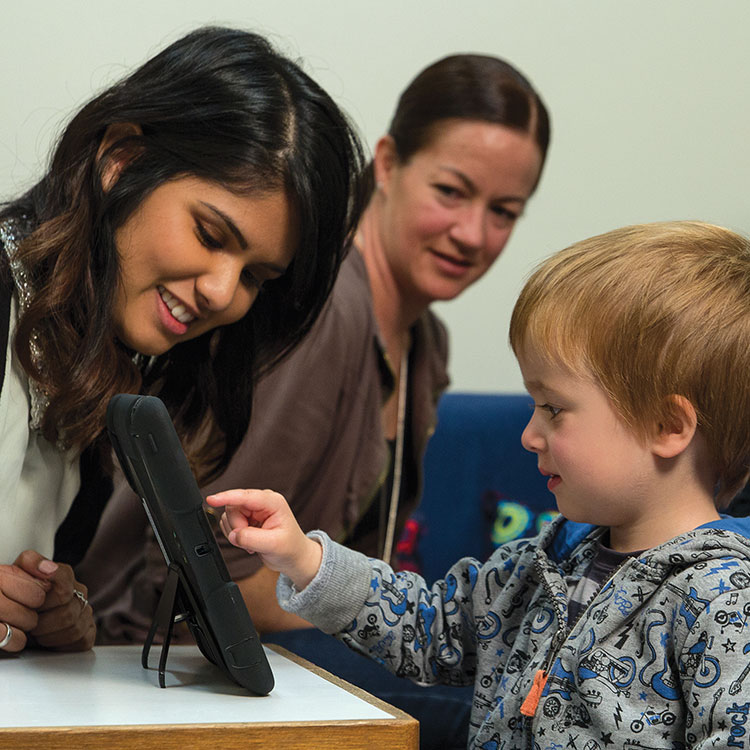
A The Kids Research Institute Australia study has shown that in addition to intervention with trained therapists, children with autism may benefit from app-based therapies.
Aotearoa New Zealand does not provide publicly-funded intensive autism support. While parent-mediated supports are promising, children and families may also benefit from direct clinician support. We tested the efficacy of a low-intensity programme involving parent- and clinician-delivered support for autistic children.