
Skip to content
The Kids Research Institute Australia logo
Donate

Search

Safety and Immunogencity of a Prototype Adjuvanted Inactivated Split-Virus Influenza A (H5N1) Vaccine in Infants and Children

Highly pathogenic avian influenza A virus (H5N1) is a leading candidate for the next influenza pandemic, and infants and children may play an important role...

Clinician perceptions of research priorities for the management of noncritically ill patients admitted to hospital with SARS-CoV-2 infection

The changing phenotype of coronarvirus disease 2019 (COVID-19) may quickly render guideline-recommended interventions obsolete. We developed a 40-question clinician survey in consultation with the Australasian COVID-19 Trial site investigators. The survey was designed to assess clinician perceptions of the current treatment strategies and future research priorities in the management of non-critically ill patients admitted to hospital with SARS-CoV-2 infection.  

Influenza vaccination in Western Australian children: Exploring the health benefits and cost savings of increased vaccine coverage in children

To assess potential benefits and direct healthcare cost savings with expansion of an existing childhood influenza immunisation program, we developed a dynamic transmission model for the state of Western Australia, evaluating increasing coverage in children < 5 years and routinely immunising school-aged children.

Latest news & events

Latest news & events at the Wesfarmers Centre of Vaccines & Infectious Diseases.
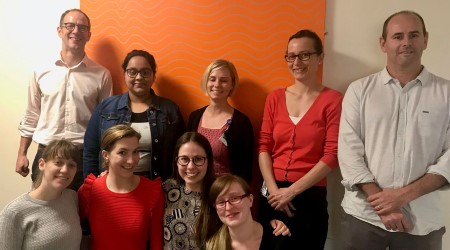
Warm Welcome for the Neonatal Infection and Immunity Team

Clinical Professor Tobias Strunk, Dr Andrew Currie and their Neonatal Infection and Immunity Team have become the newest members of the Wesfarmers Centre of Vaccines and Infectious Diseases.

Targeting interventions to improve influenza control: a proof of principle geomapping study

Christopher Kefyalew Hannah Blyth Alene Moore MBBS (Hons) DCH FRACP FRCPA PhD BSc, MPH, PhD OAM BSc (Hons) GradDipClinEpi PhD Centre Head, Wesfarmers

Consistency of self-reported and documented historical influenza vaccination status of US healthcare workers

Healthcare personnel (HCP) are a priority group for annual influenza vaccination. Few studies have assessed the validity of recall of prior influenza vaccination status among HCP, especially for more than one preceding season.

How immunity shapes the long-term dynamics of influenza H3N2

Since its emergence in 1968, influenza A H3N2 has caused yearly epidemics in temperate regions. While infection confers immunity against antigenically similar strains, new antigenically distinct strains that evade existing immunity regularly emerge ('antigenic drift'). Immunity at the individual level is complex, depending on an individual's lifetime infection history.

Inferring temporal trends of multiple pathogens, variants, subtypes or serotypes from routine surveillance data

Estimating the temporal trends in infectious disease activity is crucial for monitoring disease spread and the impact of interventions. Surveillance indicators routinely collected to monitor these trends are often a composite of multiple pathogens. For example, "influenza-like illness"-routinely monitored as a proxy for influenza infections-is a symptom definition that could be caused by a wide range of pathogens, including multiple subtypes of influenza, SARS-CoV-2, and RSV.

Boosting the influenza vaccine schedule in children with cancer: a prospective open-label study

Current immunization guidelines recommend one dose of influenza vaccine for children aged ≥9 years and two doses for younger or vaccine-naïve children. However, children receiving chemotherapy have an attenuated immune response. We performed a prospective open-label study in children undergoing treatment for cancer at Perth Children's Hospital, Western Australia, to examine the safety and efficacy of a boosted influenza schedule.