
Search
Chris Deborah Peter Natasha Valerie Brennan-Jones Lehmann Richmond Morrison Swift PhD AO, MBBS, MSc MBBS MRCP(UK) FRACP Head, Ear and Hearing Health
Deborah Hannah Lehmann Moore AO, MBBS, MSc OAM BSc (Hons) GradDipClinEpi PhD Honorary Emeritus Fellow Head, Infectious Diseases Research 08 6319 1427
Otitis media (OM, middle ear infections) and the consequent hearing loss are major concerns for Aboriginal people and OM can seriously impact on children’s learning potential which in turn will impact on life as an adult.
Deborah Peter Lehmann Richmond AO, MBBS, MSc MBBS MRCP(UK) FRACP Honorary Emeritus Fellow Head, Vaccine Trials Group Honorary Emeritus Fellow Head,
Deborah Lehmann AO, MBBS, MSc Honorary Emeritus Fellow Honorary Emeritus Fellow Clinical Associate Professor Deborah Lehmann is a medical
This study sought to determine the prevalence of Developmental Language Disorder (DLD) in Australian school-aged children and associated potential risk factors for DLD at 10 years.
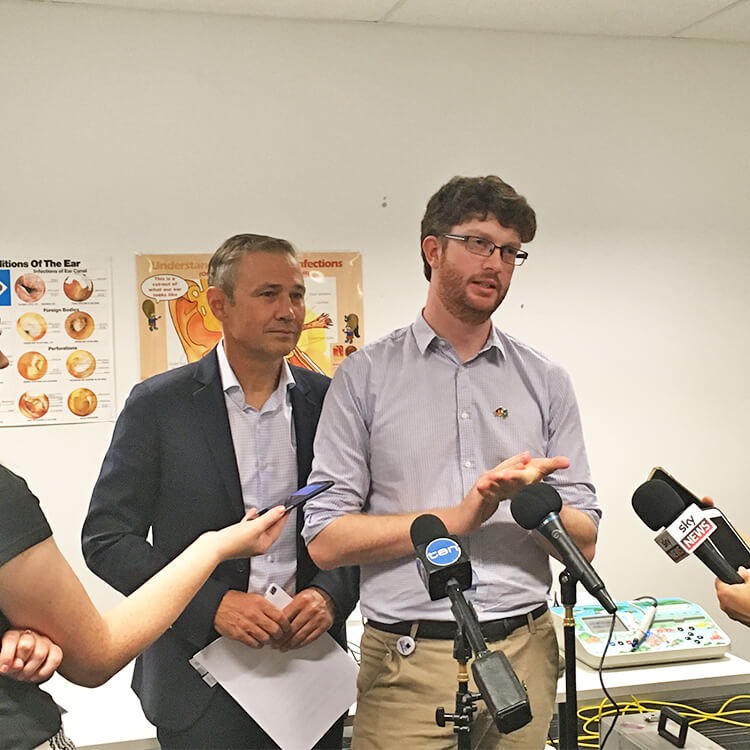
Wait times for Aboriginal children suffering ear infections could be reduced to less than four weeks thanks to a new The Kids Research Institute Australia research project

Check out our top tips for travelling with an ear infection so that the kids can fly safely and hit the pool in no time.
A telehealth-facilitated randomised-controlled trial utilising a health promotion intervention to resolve otitis media with effusion for children won specialist Ear, Nose and Throat (ENT) waiting lists
Otitis media with effusion (OME) affects hearing, speech development, and quality of life (QoL) in children. The 'Blow, Breathe, Cough' (BBC) intervention promotes nasal, respiratory, and middle ear clearance through nose blowing, deep breathing, coughing, and hand hygiene. It shows promise in resolving OME but lacks randomized-controlled trial (RCT) evaluation. This paper presents a RCT protocol evaluating BBC's effect on OME resolution, hearing, speech, and QoL in children aged two to seven years.