
Search
Socio-economic inequality and vaccination inequity have long been critical issues. However, no studies have explored the gap in influenza vaccination uptake between public and private schools. Importantly, the extent to which socio-economic inequality translates into vaccination uptake inequity has not been quantified.
Antimicrobial resistance (AMR) is a global healthcare emergency, directly causing 1.3 million deaths per year and predicted to increase dramatically over the coming decades. Understanding the molecular mechanisms underpinning antibiotic resistance is central to approaches for AMR surveillance and diagnosis in a clinical laboratory.
Non-coercive 'nudge' interventions have shown the potential to promote health behaviours. This study aimed to evaluate the impact of nudge interventions on COVID-19/influenza vaccine uptake among children with medically at-risk conditions.
High nasopharyngeal pneumococcal carriage density is associated with severe pneumonia; however, little is known about factors that affect pneumococcal carriage density including pneumococcal vaccination. We describe pneumococcal density by clinical and demographic factors, and effect of 13-valent pneumococcal conjugate vaccine (PCV13) on density in Papua New Guinea (PNG), Lao People’s Democratic Republic (Lao PDR) and Mongolia, 3–6 years following national PCV13 introduction.
Licensed recombinant protein respiratory syncytial virus (RSV) vaccines can prevent substantial morbidity in older adults. However, revaccination to prevent waning protection may be suboptimal, prompting the exploration of candidates for heterologous boosting. In this clinical trial of RSV vaccine-naive older adults, we evaluated SCB-1019T, a novel unadjuvanted bivalent RSV prefusion F (preF) protein vaccine stabilized via Trimer-Tag technology, in comparison to the licensed AS01E-adjuvanted RSV vaccine Arexvy.
Gram-negative bacterial infections remain a major cause of morbidity and mortality in children and neonates globally, compounded by the rise of antimicrobial resistance. Barriers to paediatric antibiotic licencing lead to reduced availability of potentially effective agents for treatment. For children and neonates in the Oceania region, specific challenges remain including a paucity of surveillance data on local rates of antimicrobial resistance, and lack of availability of newer, more costly agents.

Pneumococcal – a bacterial infection that can cause pneumonia and meningitis – is responsible for 1000s of hospital admissions in Australia each year, many of them children.
Immunisation is the most effective way of protecting your child against a range of serious illnesses, including measles, hepatitis B and whooping cough. All vaccines used in Australia undergo stringent testing and ongoing monitoring.
Vaccination is the injection of an inactivated bacteria or virus into the body. This simulated infection allows an individual's immune system to develop an adaptive immunity for protection against that type of illness. When a sufficiently large percentage of a population has been vaccinated, this results in herd immunity.
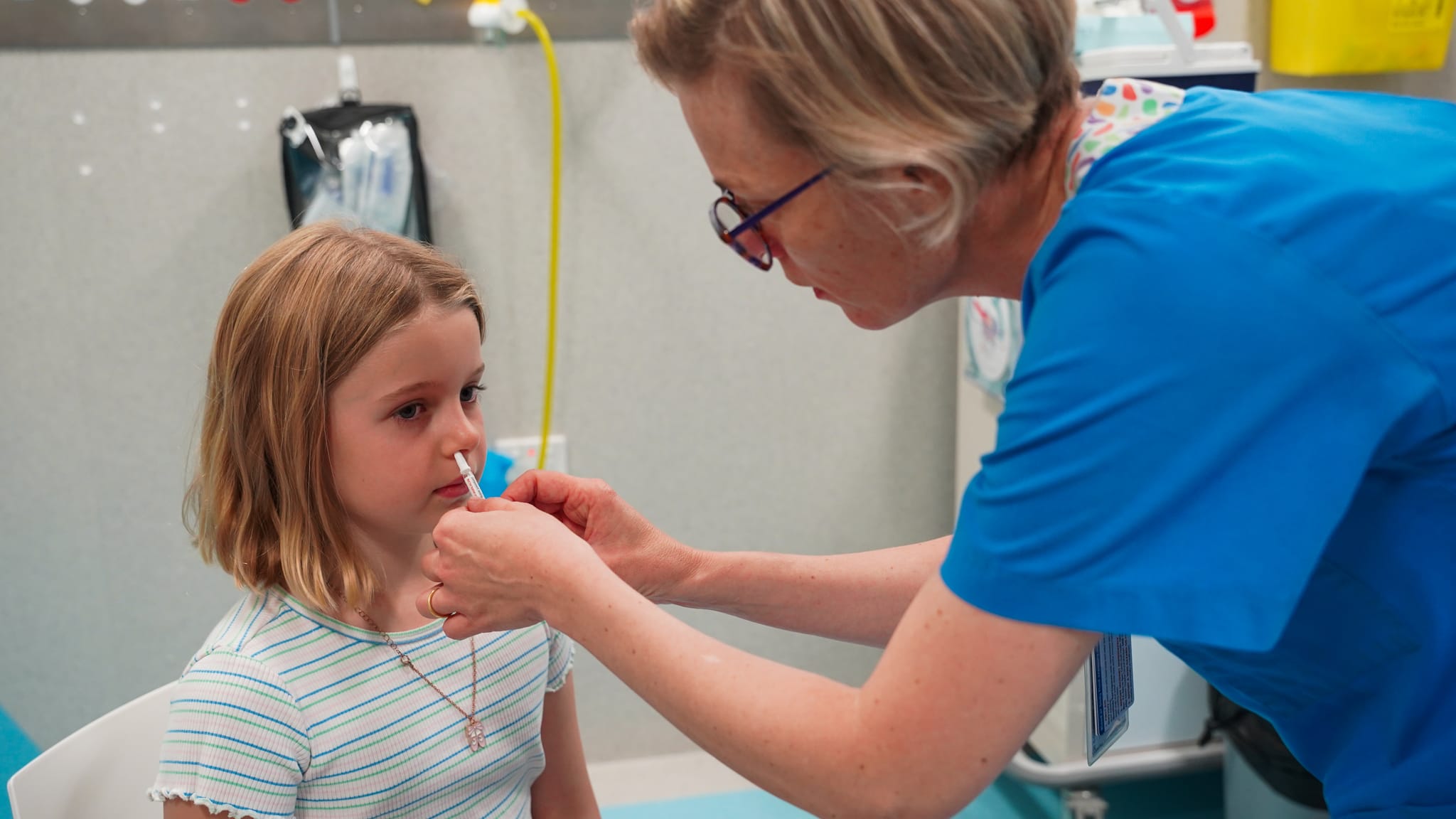
Influenza (commonly known as the flu) is caused by a highly contagious virus spread mainly through coughing and sneezing. An annual flu vaccination is the most effective way to prevent flu outbreaks.