
Search
Neurodevelopmental disorders (NDDs) have high comorbidity rates and shared etiology. Nevertheless, NDD assessment is diagnosis-driven and focuses on symptom profiles of individual disorders, which hinders diagnosis and treatment. There is also no evidence-based, standardized transdiagnostic approach currently available to provide a full clinical picture of individuals with NDDs. The pressing need for transdiagnostic assessment led to the development of the Neurodevelopment Assessment Scale.
Andrew Helen Jenny Peter Videos Whitehouse Watch and listen to Andrew Leonard Downs Jacoby PhD MBChB MPH BApplSci (physio) MSc PhD BA (Hons) MSc
Andrew Gemma Gail Videos Whitehouse Watch and listen to Andrew Upson Alvares PhD BSc MClinAud MBA PhD Deputy Director (Research); Angela Wright
Amy Andrew Carol Jacinta Videos Finlay-Jones Whitehouse Watch and listen to Andrew Bower Freeman BPsych(Hons), MPsych(Clinical), MHealthEcon, PhD (
Little is known about parent preferences regarding delivery methods of early interventions. This research examined, through parent report, the current and preferred delivery methods of seven common educational early interventions accessed by New Zealand children with autism spectrum disorder.
Reading and writing are crucial life skills but roughly one in ten children are affected by dyslexia, which can persist into adulthood. Family studies of dyslexia suggest heritability up to 70%, yet few convincing genetic markers have been found.
Caregiver-mediated supports in general have shown mixed evidence for enhancing language outcomes in infants at higher likelihood of autism. While caregivers play a substantial role in caregiver-mediated supports, little is known about whether caregivers' own subclinical autistic features - known as broader autism phenotype - may moderate infant language outcomes.
Eye-tracking could expedite autism identification/diagnosis through standardisation and objectivity. We tested whether Gazefinder autism assessment, with Classification Algorithm derived from gaze fixation durations, would have good accuracy (area under the curve [AUC] ≥ 0.80) to differentiate 2-4-year-old autistic from non-autistic children.
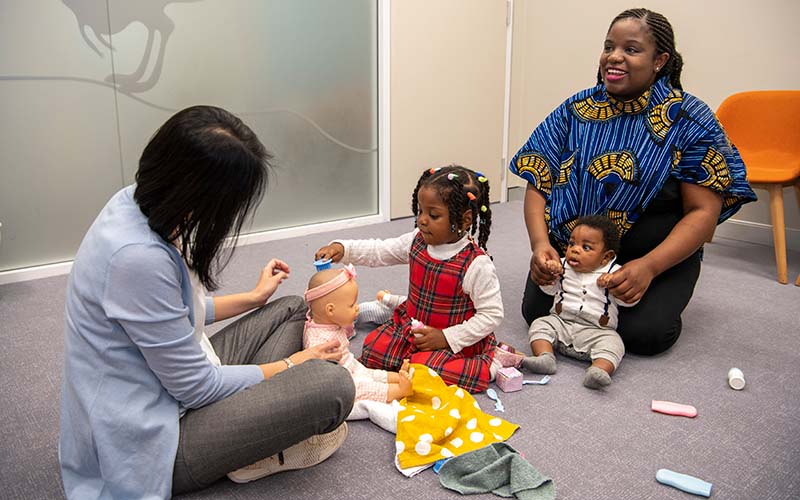
The Kids' autism research takes place at CliniKids, a centre that integrates world-class research with a clinical service for children with developmental delay and/or autism and their families.
This study aims to investigate the cellular and molecular profiles of the immune system in infants at high/low risk for Autism, as determined through clinical assessment.