
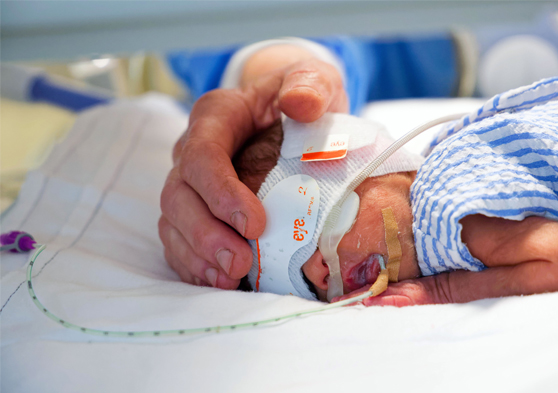
The main CIRCA DIEM Study includes several substudies. These substudies helped researchers explore specific questions about how circadian rhythms may influence the health and development of babies born very preterm.
MRI Substudy
The MRI substudy focuses on identifying whether early development of circadian rhythms after preterm birth may influence the structural development of the brain.
Some babies at hospitals participating in the substudy underwent a Magnetic Resonance Imaging (MRI) scan before discharge as part of their routine clinical care if their parents assented to them being part of the MRI substudy. Researchers will analyse these brain MRI scans to examine early brain development and explore whether the CIRCA DIEM intervention i associated with differences in brain structure and maturation. This study is being run by Professor Rod Hunt and his team at Monash University.
Sleep Substudy
The Sleep substudy examines whether supporting the early development of circadian rhythms had lasting effects on sleep after babies were discharged home from hospital.
Parents and caregivers completed additional questionnaires and sleep diaries at 2 months and 6 months after their infants were discharged home to help researchers understand how cycled light and noise in hospital influences sleep patterns in both the preterm infants and their families. Some families also participated in additional assessment, including saliva collection to assess melatonin levels and 24-hour sleep monitoring using a small watch-like device called an actigraph. These assessments will provide information about sleep duration, sleep quality, and sleep-wake patterns over time.
View the sleep substudy brochure
Infection and Immunology Substudy
A strong immune system is important to help fight infections, especially for premature babies who are at a higher risk of becoming unwell while they are in hospital, and in their first few years after being discharged home.
Recent research suggests that our circadian rhythm plays a very important role in how our immune system works. The main aim of the Infection and Immunology Sub-Study is to find out whether the timing of the development of a circadian rhythm can influence the likelihood of premature babies developing infections while they are growing up.
If you are asked to take part in this sub-study, we will ask you to track when your baby is feeling unwell using an app on your phone. Based on how your child is feeling, we may ask you to complete some additional questions such as whether your baby needed to see a doctor, or go to the hospital.
For participants who live in Perth, Western Australia, researchers at The Kids Research Institute Australia will ask for your permission to collect some additional samples from you and your baby. These samples will help us to understand how timing of the development of the body clock plays a role in how often babies’ develop infections.
View the Infection and Immunology brochure
Social Communication Sub-study
Children that are born preterm are at an increased risk for delayed communication development.
The CIRCA DIEM Social Communication Sub-Study aims to understand if our study intervention (eye masks and ear plugs at night during hospitalisation) reduces the number of children who show signs of delayed development in not only how they think, but also how they behave and communicate.
As a part of the main CIRCA DIEM study, parents are asked to complete a checklist about their child’s communication and development. Depending on the results of this survey, parents may be asked if their child would like to participate in the Social Communication Sub-Study.
Children taking part in the Social Communication Sub-Study will be invited to complete an additional play-based assessment when they are around 2 years of age. This assessment looks more closely at a child’s communication and development and takes approximately one hour to complete.