Search
Food retail and food service outlets can be part of a chain, or independently operated. Chain food outlets are likely to have the most influence over community food environments but have not been routinely identified in studies which map and monitor access to food, highlighting an important knowledge gap. This study aimed to identify the food retail and food service outlets present within metropolitan Perth, including presence of chain and independent food outlets; and examine differences across local governments.
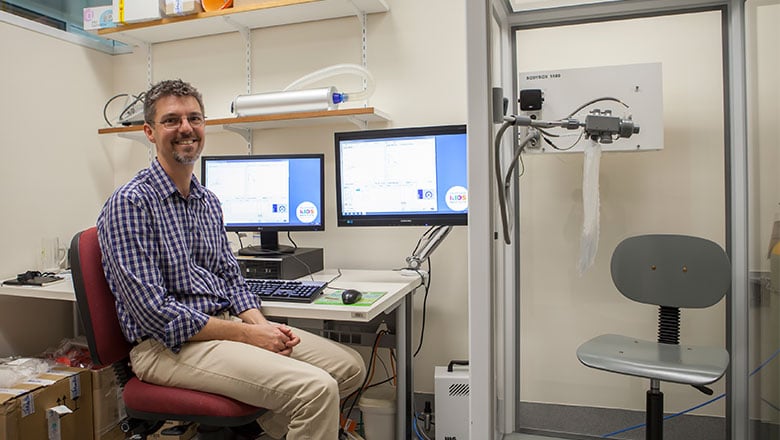
Respiratory oscillometry (or the forced oscillation technique) is a highly practical lung function test that can be applied in a wide range of clinical scenarios in children and adults, including the clinic, intensive care unit, patient home monitoring and emergency departments. Oscillometry measurements complement spirometry in detecting abnormal lung function, measuring effects of treatment such as inhaled corticosteroids or bronchodilators, and changes due to disease activity.
Down syndrome, the most common genetic disorder, is caused by the presence of all or part of a third copy of chromosome 21. We identified the top 10 patient and carer research priorities for children with Down syndrome.
Childhood is a critical period for the development of movement behaviours such as physical activity, sleep and sedentary behaviour. The PLAYCE Cohort was established to investigate how movement behaviours change over early to middle childhood, across key behaviour settings and relationships with health and development. An overview of the PLAYCE cohort, summary of key findings to date, and future research opportunities are presented.
Non-suicidal self-injury (NSSI) is particularly common among trans young people. NSSI is most commonly used as an emotion regulation strategy, which may explain the high prevalence of the behavior among trans young people, who often experience unique stressors. In the current study we test an application of the Pantheoretical Framework of Dehumanization, in which transphobic experiences, body surveillance, body dissatisfaction, and gender dysphoria are all theorized to predict NSSI.
High levels of sedentary behaviour are associated with poor child health outcomes such as obesity. Early childhood education and care (ECEC) services are a key intervention setting. Most ECEC policy-based interventions focus on children's nutrition and physical activity with few aimed at children's sedentary behaviour.
Since its emergence in 1968, influenza A H3N2 has caused yearly epidemics in temperate regions. While infection confers immunity against antigenically similar strains, new antigenically distinct strains that evade existing immunity regularly emerge ('antigenic drift'). Immunity at the individual level is complex, depending on an individual's lifetime infection history.
The experience sampling method (ESM) is increasingly used by researchers from various disciplines to answer novel questions about individuals’ daily lives. Measurement best practices have long been overlooked in ESM research, and recent reviews show that item quality is often not reported in ESM studies. The absence of information about item quality may be partly explained by the lack of consensus on how ESM item quality should be evaluated.
Controlled human infection (CHI) models can provide insights into transmission of pathogens such as Streptococcus pyogenes (Strep A). As part of the Controlled Human Infection with Penicillin for Streptococcus pyogenes (CHIPS) trial, we explored the potential for transmission among participants deliberately infected with the Strep A emm75 strain.
Melissa Penny PhD, PD, BSc (Hons) Professor Fiona Stanley Chair in Child Health Research melissa.penny@thekids.org.au Professor Fiona Stanley Chair